“Corruption and hypocrisy ought not to be inevitable products of democracy, as they undoubtedly are today” – Mahatma Gandhi.
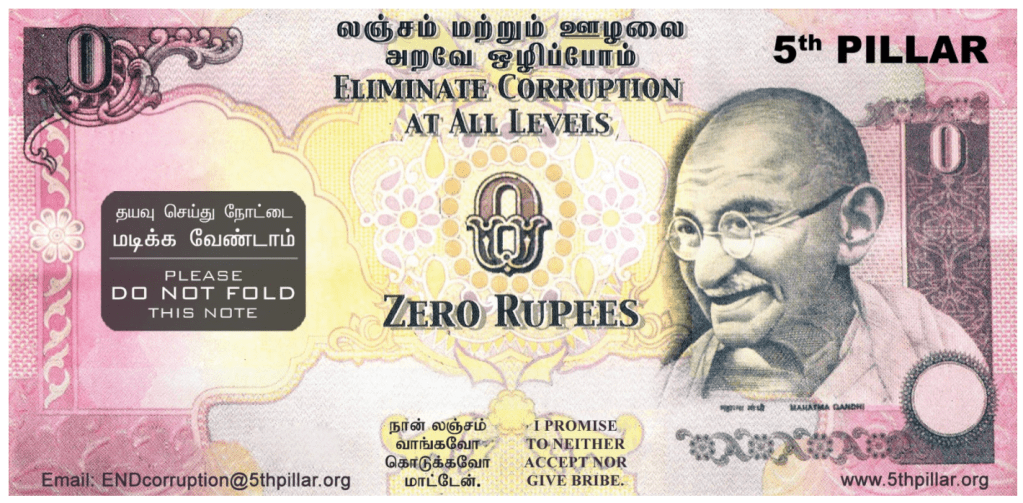
India is a democractic republic, unlike other countries like China which is a republic but not a democracy. We have a system of indirect democracy, where citizens elect certain members of the society as their representatives in the government, who in turn take decisions on their behalf. One of the shortcomings of such a demoractic system is that it is only effective if the people’s representatives are free from any selfish wants of their own, completely self-less and dedicated only for the benefit of others. Such highly unrealistic expectations, which form the core foundation of an indirect democracy, are completely flawed from a sociological perspective.
Corruption is a natural manifestation of an opportunistic mind. Intriguing it may sound, but evolution has forced us (and all living beings) to be selfish in nature. Whatever be the situation, our mind always focusses on protecting the self and loved ones first, the primary rule of survival makes all of us too self-centered and greedy, which is another term for being “protectionist”. It is hard for us to spend our own time and energy for the greater benefit of others, people not related to us. In an indirect democracy, the elected representatives, no matter how popular they are, will always focus on their self first. Given the fact that there is no direct authority above them, it makes them all the prone to the tentacles of corruption. Add the administrative power to this mix, and it becomes a hot bed where corruption multiplies like a virus thriving in ideal conditions.
It takes immense control over self to detach and look away from the lures of corruption. Such a high degree of selflessness is hard to attain and requires good control of ones mind to avoid falling prey to corruption, which again is quite unrealistic given the stature of most of our elected leaders. So what is the plausible solution for taming a corrupt republican indirect democracy? The answer lies in 5th pillar of democracy itself. These are the modern components of a successful democratic system:
1. The Legislature which creates laws.
2. The Executive which enforces laws.
3. Strong and independent Judiciary to interpret laws.
4. Open and free Media
5. We, The People.
Fortunately we have an independent judicial system in place, and the media is also free to some extent from the government clutches. The biggest issue in a democracy is that anarchy can actually prevail till eternity if its citizens choose to keep mum, shutting their eyes and ears aiding political apathy. If the people are aware and join their hands together, they can shake the entire political system and force the legislature and the executive to amend a corrupt system. It all boils down to self-awareness and getting rid of the natural feeling of being indifferent. So those so called “purists” who say that civil movements like the Janlokpal bill in India are anti-democratic, anti-constitutional etc, have not yet fully understood the true meaning of a republican democracy. Just because we have given a few people our mandate to be the leaders of our government does not make them un-accountable to us. Elected leaders should be the servants of people, not the other way round. If they become corrupt, then they deserve harsher punishments. And we have every right to protest and change laws if the laws support them.
The fifth pillar of democracy is indeed the strongest one, and derives its power from the unity and collective awareness of the citizens towards a common goal. In this sense, people’s power forms the true core of a democractic system, as long as the citizens themselves are aware of it. This fifth pillar is the only barrier between democracy and anarchy.
“The accomplice to the crime of corruption is frequently our own indifference”